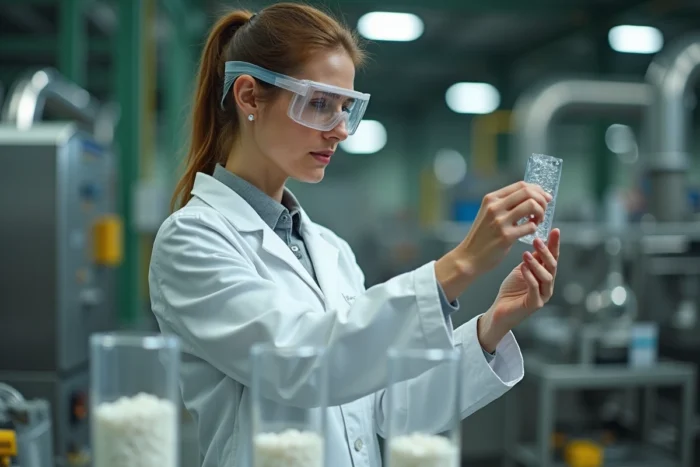
When a company burns through more than 300 million euros without having yet industrialized its technology, the questions posed by investors change in nature. It is no longer about potential, but about execution capacity. Carbios, the Clermont-based deeptech company specializing in the enzymatic recycling of PET, finds itself at this tipping point where technological promise is no longer enough to convince.
Enzymatic recycling of PET: what the industrial field really demands
It is often said that Carbios has a breakthrough technology. Enzymatic biorecycling allows for the decomposition of PET (bottles, synthetic textiles) into its original monomers using enzymes, and then reconstituting it into virgin plastic. On paper, the loop is perfect.
In practice, transitioning from a demonstrator to an industrial site poses constraints that laboratory chemistry does not resolve. It is necessary to manage the supply of sorted PET waste, maintain stable enzymatic yields at scale, and ensure sufficient resin quality to meet brand specifications. Feedback varies on this point depending on the tested batches, and this is precisely where Carbios’s industrial credibility is at stake.
To understand Carbios’s position in the market, one must look beyond the patent: what matters now is the ability to deliver regular volumes at a competitive cost compared to mechanically recycled PET and virgin PET derived from petroleum.
Longlaville plant and Wankai partnership: two projects, two logics
The reference plant project in Longlaville, in Lorraine, was supposed to embody Carbios’s scaling up on French soil. The financing file got bogged down, and management had to revise its timeline. For a startup that currently employs around sixty people after having counted nearly 190, this delay is not just a technical issue: it erodes investor confidence.
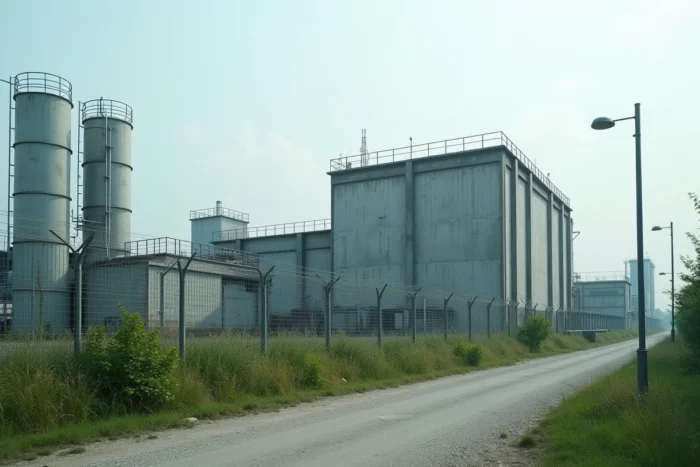
At the same time, the agreement signed at the end of 2025 with Wankai New Materials (a subsidiary of the Zhink Group, among the largest PET producers in China) opens a second front. The joint venture, 70% owned by Wankai and 30% by Carbios, will manage a first plant in Haining, in the Zhejiang province. The stated ambition ultimately aims for considerable processing capacity, up to one million tons of PET per year across multiple sites.
The two projects respond to opposing logics. In Longlaville, Carbios bears the industrial and financial risk. In China, it grants a license and shares the risk with a player already established in the local value chain. It is this second model that attracts the attention of analysts because it generates licensing revenue without mobilizing as much capital.
Carbios facing competition: industrial alliances against technological race
The competition in plastic recycling is no longer played out between lab startups. It pits complete ecosystems against each other: a resin producer associated with a technology holder, backed by brands willing to pay a premium for certified recycled plastic.
Carbios has understood this shift. Here are the competitive axes on which the company positions itself:
- Granting licenses to established industrial players (Wankai model) rather than building in-house, to accelerate deployment without burdening the balance sheet
- Diversification towards PETG with the Selenis partnership, targeting the cosmetics and healthcare markets, segments with higher added value than bottles
- Maintaining an edge in enzymatic biorecycling thanks to a portfolio of patents, against competitors working on other pathways (chemical recycling via glycolysis, pyrolysis)
The partnership with Selenis for the production of PETG from biorecycling demonstrates a diversification logic. Instead of fighting solely in the highly contested PET bottle market, Carbios seeks outlets where the value of the recycled material justifies the enzymatic cost.
Carbios stock and investor signals: what the market reveals
The Euronext Growth report for the first half of 2026 ranks Carbios among the files penalized by investors. The cited reasons: financial tensions, operational delays, and lack of strategic visibility. The market now values industrial execution capacity, not just the promise of a breakthrough.
For a company listed on Euronext Growth, of which nearly 85% of the capital is publicly traded, this stock market sanction has direct consequences. Raising new funds becomes more expensive. Attracting industrial partners requires showing concrete milestones, not projections.
Here we observe a classic gap in the green chemistry industry: the technology works, but the economic model remains to be proven at scale. Investors no longer ask “does it work?” but “does it produce, at what cost, and when?”.

Carbios in 2026: the conditions to stay in the race
Three elements will determine whether Carbios maintains its position in the coming quarters:
- The concrete advancement of the Haining site with Wankai, the first large-scale test of the licensing model in Asia
- The unlocking of financing for Longlaville, which conditions the credibility of European deployment
- The ability to sign other licensing or co-development agreements, particularly on PETG with Selenis, to diversify revenue sources
Carbios management has gone through periods of internal tension, with staff reductions and cuts in R&D. These choices weigh on medium-term innovation capacity, even if they relieve cash flow in the short term.
Enzymatic recycling of PET remains a technology that few players master at this stage. The question is not whether the market exists, but whether Carbios will have the financial means to reach it before competitors find less costly industrial shortcuts. The next milestone will be the actual start of production in Haining, likely the most scrutinized signal by investors and potential partners.