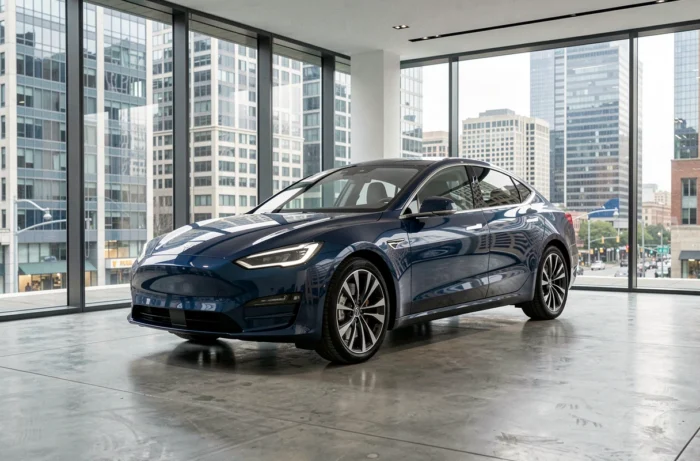
In July 2026, 100% electric cars surpassed 25% market share in Europe. This shift is evident daily in dealerships, in the queues at charging stations, and in the tightening traffic restrictions in cities. The automotive world is undergoing a rapid restructuring phase, where underlying trends matter more than isolated model announcements.
Low Emission Zones: The Timeline That Forces Drivers’ Hands
The most tangible constraint for millions of French drivers is not a new model, but the expansion of Low Emission Zones (LEZ). In Lyon and Paris, the Crit’Air thresholds change every year. Specifically, a Crit’Air 3 vehicle will become unusable in Greater Paris by 2027. This affects a significant portion of the diesel fleet registered before 2011.
For professionals driving utility vehicles, the pressure is even greater. Feedback varies on this point depending on the metropolitan areas, but the general trend pushes towards newer, hybrid, or electric engines to continue delivering in city centers.
These developments are regularly tracked in the automotive news on autoworldblog.net, which cover both regulatory announcements and the launches of affected models.
Electric Market Share in France and Germany: The 2026 Figures
In the first seven months of 2026, traditional combustion vehicles account for only 29% of sales in Europe. The balance of power has shifted.
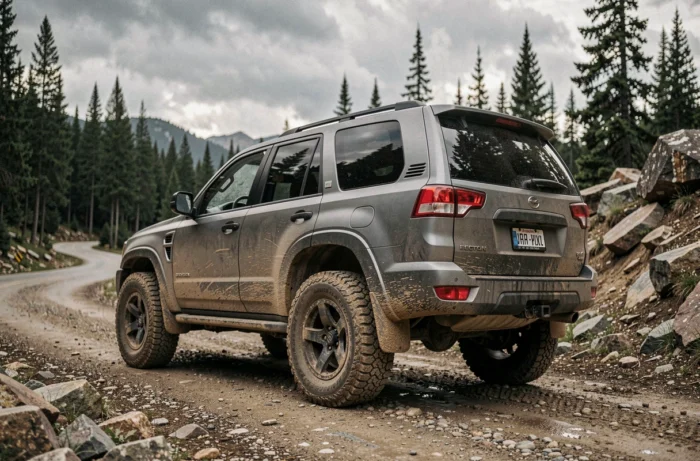
In France, the electric market share reached 29% from January to July 2026, which is eleven points higher than in 2025. Germany follows at 26%, an increase of eight points. These two markets drive the European momentum.
The speed of this transition is surprising. We are no longer talking about a niche segment reserved for early adopters. Traditional combustion vehicles are now in the minority compared to the entire electric and hybrid segment. For a hesitant buyer, the question of residual value in five years increasingly leans towards electric, as traffic restrictions make combustion vehicles harder to resell.
Subsidies: A Fragile Engine
This acceleration is not solely due to battery maturity. National subsidies play a direct role in the volumes. In France, the ecological bonus maintained in 2026 has helped push sales to record levels.
Conversely, Italy saw its electric registrations plummet after the reduction of its subsidies. The message is clear: a sudden removal of subsidies can break the momentum in just a few months. Waiting too long to switch to electric also risks paying full price if bonuses decrease.
Chinese Manufacturers in the European Market: What It Means in Practice
In dealerships, the presence of Chinese brands is first reflected in an expanded offering in the compact electric SUV segment at aggressive prices. BYD and MG are gaining market share in the UK and the European Union.
For a French buyer, the concrete effects are as follows:
- The offering of electric SUVs under 30,000 euros is expanding, with ranges comparable to those of European brands in this price segment.
- European manufacturers (Volkswagen, Renault, BMW) are accelerating their own launches of affordable electric compacts to avoid being left behind.
- The after-sales network and availability of parts remain a question mark for recently established Chinese brands, which weighs on medium-term resale value.
The real impact of Chinese manufacturers is measured on the catalog prices of established brands, forced to lower their prices or include more standard equipment.
Premium Electric Compacts: Audi A2 e-tron and Direct Competition
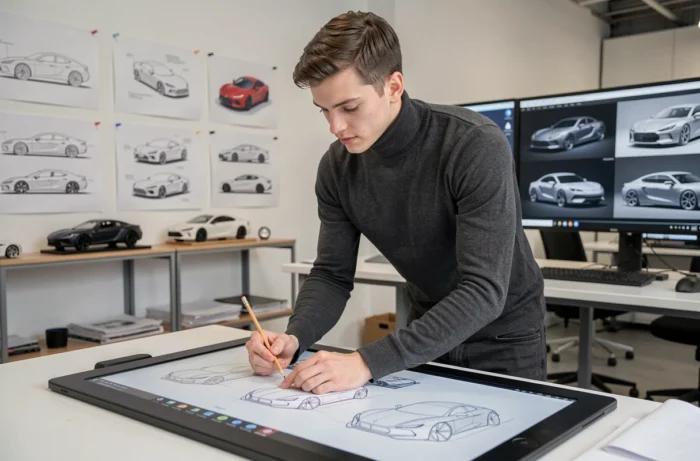
The Audi A2 e-tron, available for order, illustrates the direction taken by the high-end market. The model enters a compact segment that BMW and Mercedes are also investing in with future references. Premium manufacturers are now targeting the compact segment, long deemed insufficiently profitable for them. The competition promises to be fierce from the first months of commercialization.
Renault Niagara and the Return of the French Pickup
On the Renault side, the Niagara marks an unexpected turn. A mainstream French pickup is a gamble that few European manufacturers have attempted. The model targets both construction professionals and individuals looking for a versatile vehicle outside the classic SUV paths.
Porsche, on its side, keeps us waiting with its electric Boxster, still at the prototype stage seen at Nürburgring. The gap between announcements and actual availability in dealerships remains a recurring issue in the electric sports segment.
New Cars in 2026: The Criteria for Choice That Have Truly Changed
Three years ago, a car was chosen based on the engine type, price, and design. In 2026, other parameters weigh just as much in the decision:
- The ZFE compatibility of the vehicle and its Crit’Air sticker, which determines access to city centers over the next five to ten years.
- Eligibility for the ecological bonus, the amount and conditions of which change regularly and can represent several thousand euros.
- The estimated residual value in five years, directly linked to the type of engine and the foreseeable evolution of traffic restrictions.
A car purchase in 2026 is as much a regulatory calculation as a choice of pleasure. Integrating these parameters right from the order avoids ending up with a vehicle that is hard to resell in a few years. The market no longer rewards inaction.