
The construction sector remains one of the largest job providers in France, but the systems that finance apprenticeships in the building industry have significantly changed as of the 2026 school year. New funding grids, hiring aids differentiated by diploma level and company size: training in building apprenticeships now follows a financial framework that must be closely examined before signing a contract.
Funding for building apprenticeships: what changes in 2026
Decree No. 2026-168 of March 6, 2026, has redefined hiring aids for contracts concluded between March 8 and December 31, 2026. The logic is simple: the aids vary according to the diploma level and the size of the company. The exceptional aid particularly distinguishes between bac+2 and bac+5 levels, while the unique aid remains focused on diplomas up to the baccalaureate in companies with fewer than 250 employees.
At the same time, the levels of funding for CFA have been revised for contracts concluded from September 1, 2026. Each certification now has its own funding amount, which the CFA and the company must verify before signing. The aid for initial equipment also becomes less favorable for higher-level training, which weighs more heavily on apprentices aiming for a BTS or engineering degree than on those preparing for a CAP.
Breton CFAs, particularly those listed on https://www.batiment-cfa-35.fr/, offer support to identify the applicable funding for each pathway before enrollment.
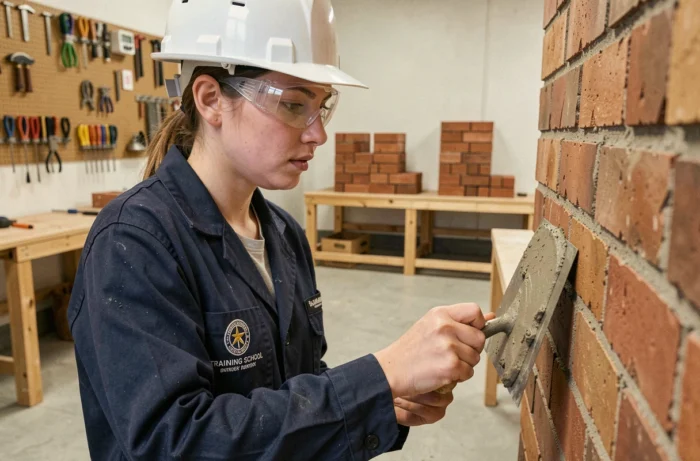
Hiring aids for a BTP apprentice: comparative table by level
The table below summarizes the structure of aids as outlined in the March 2026 decree and the clarifications provided by CAPEB. The exact amounts depend on each situation, but the reading grid remains the same.
| Target diploma level | Type of aid | Company size condition |
|---|---|---|
| CAP, professional bac (up to bac) | Unique aid | Companies with fewer than 250 employees |
| BTS, professional license (bac+2 to bac+3) | Exceptional aid (differentiated amount) | All sizes, contracts from March 8 to December 31, 2026 |
| Master, engineering degree (bac+4 to bac+5) | Exceptional aid (reduced amount compared to bac+2) | All sizes, contracts from March 8 to December 31, 2026 |
The unique aid and the exceptional aid cannot be combined: the company benefits from one or the other depending on the level of the diploma being prepared and the date of contract signing. This distinction directly influences the choice of pathway for both the apprentice and the employer.
What this implies for a building craftsman
A craft company with fewer than 250 employees that hires an apprentice in CAP masonry or CAP roofing accesses the unique aid, with no date limit. In contrast, the same company that hires an apprentice in BTS building envelope only benefits from the exceptional aid if the contract is signed before the end of 2026.
For very small structures, often predominant in the BTP, the CAP and professional bac remain the most financially supported training programs. This is a parameter to consider right from the search for a host company.
Pathways in CFA building: from CAP to engineering degree
Apprenticeship in construction is not limited to CAP. Building CFAs cover a range of certifications that structure long professional trajectories.
- The CAP (mason, electrician, plumber, roofer, carpenter, painter) forms the technical foundation, accessible from the age of 16 and lasting two years in alternating periods between the CFA and the construction site.
- The professional bac and professional certificate allow access to team leader or specialized technician roles, with training that deepens the reading of plans, measurement, and site management.
- The BTS building, BTS public works, or BTS building envelope open the way to positions as site managers or study managers, in direct connection with design offices and project owners.
- Some CFAs offer pathways to engineering degrees through apprenticeship, a curriculum that combines field skills and advanced scientific training.
Each level of certification corresponds to an identified profession and a level of responsibility on the construction site. The choice of diploma also determines the amount of aid received by the employer, which impacts the ease of finding a host company.
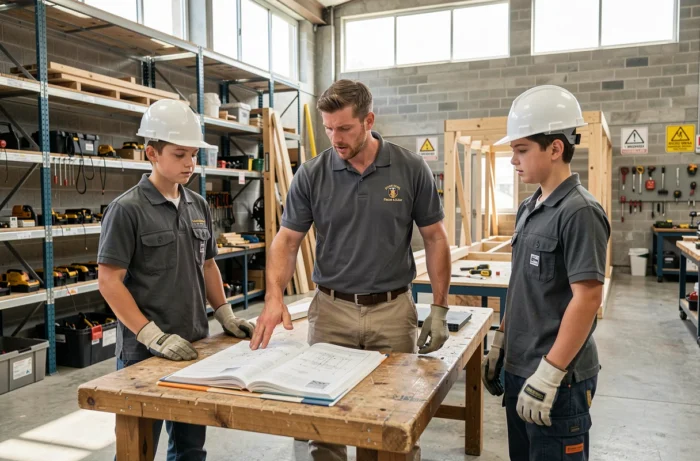
Construction job market: why apprenticeship remains a lever for integration
The BTP is massively recruiting qualified workers. According to CAPEB, the renovation and adaptation of the housing stock, driven by the aging population and the strengthening of environmental standards, continue to open positions. The report from France Stratégie confirms this structural trend.
Apprenticeship presents a measurable advantage in this market: an apprentice trained in alternating periods masters professional gestures as soon as they obtain their diploma. Construction companies, faced with a shortage of qualified labor, prefer candidates who are immediately operational.
Skills in demand and sectors under pressure
The trades of roofing, electricity, and plumbing are among the sectors where the number of positions to be filled far exceeds the pool of candidates. Skills related to energy performance (external thermal insulation, heat pumps, double flow ventilation) are particularly in demand.
Conversely, general training without technical specialization struggles to guarantee rapid integration. The choice of a specialty in demand significantly increases hiring chances upon leaving the CFA.
The revision of hiring aids and funding levels for the 2026 school year reshapes the conditions for accessing apprenticeships in the building sector. The financial parameter, often overlooked at the time of orientation, conditions the company’s ability to recruit. Verifying the funding associated with each certification before committing remains the first concrete step in a construction apprenticeship project.