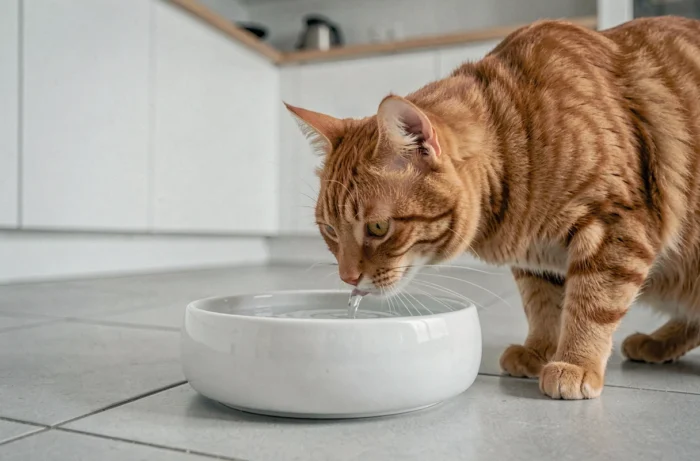
The link between hydration and kidney function in cats is no longer up for debate. Choosing a cat water fountain with kidney prevention in mind requires going beyond aesthetic or capacity criteria to focus on specific technical parameters: material, filtration, pump design, and maintenance protocol.
Biofilm and bacterial load: the invisible risk of poorly maintained fountains
A reservoir with continuous circulation is not synonymous with clean water. The biofilm, this slippery film that forms on the internal walls, creates a breeding ground for bacteria that is in direct contact with the ingested water. If this slippery sensation is felt upon touch, the fountain must be disassembled immediately.
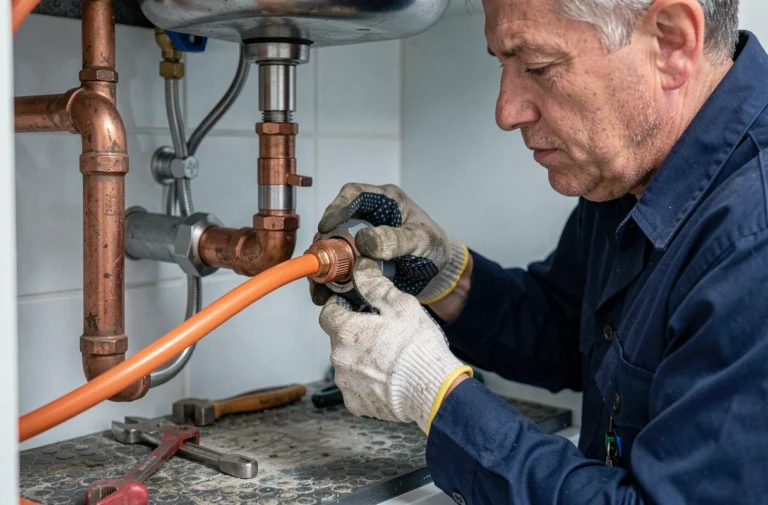
The pump housing is systematically the most contaminated area. We recommend a complete disassembly (pump, reservoir, nozzles) every three to five days, with a daily rinse of the basin. The filter should be replaced every two weeks, not according to the schedule printed on the packaging, which is often optimistic.
This point is rarely linked to kidney prevention in consumer guides. A cat that detects altered water spontaneously reduces its water intake. In the context of chronic kidney disease, where every milliliter counts, a poorly maintained fountain exacerbates dehydration instead of preventing it.
Fountain material and cat kidney health: stainless steel, ceramic, or plastic
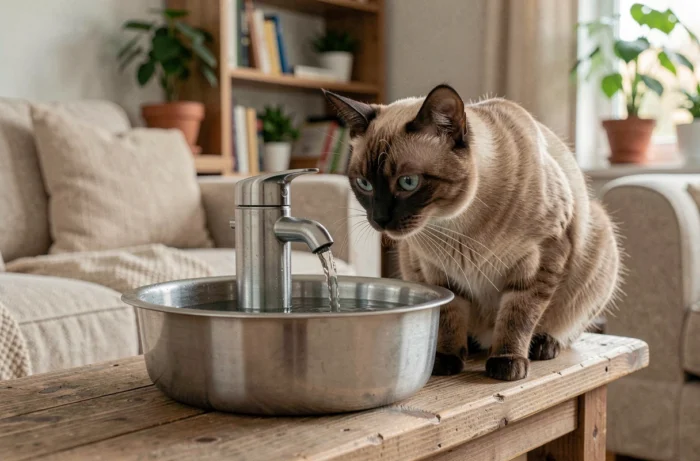
The choice of material goes beyond durability. Food-grade stainless steel type 304 (18-8) and ceramic are non-porous, scratch-resistant, and dishwasher-safe. Plastic, even food-grade, scratches over time. These micro-scratches become bacterial niches that are impossible to clean properly.
There is also an indirect effect that is often overlooked. Plastic promotes chin acne in cats (contact dermatitis). A cat bothered by skin irritation around the mouth drinks less. This reduction in water intake perpetuates the dehydration-kidney overload cycle. Choosing a cat water fountain made of stainless steel or ceramic eliminates this risk factor.
In summary, we observe that the material affects two simultaneous axes: water hygiene and skin comfort. Both converge towards the same renal consequence.
Anti-limescale filtration and water quality: what really matters
The majority of fountains incorporate an activated carbon filter, sometimes combined with a mechanical foam. This device retains hair, debris, and some volatile organic compounds. However, not all filters manage limescale in the same way.
For a cat predisposed to kidney or urinary problems, water hardness is not trivial. Very hard water increases the mineral load that the kidneys must process. Some models offer ion exchange resin cartridges, which are more effective on limescale than carbon alone. Check the compatibility of replacement filters before purchase: a model whose consumables are unavailable or overpriced will eventually operate without a filter.
- Activated carbon alone: retains organic impurities and improves taste, but does not significantly act on limescale.
- Activated carbon + ion exchange resin: reduces water hardness by capturing calcium and magnesium, which lightens the renal load.
- Mechanical foam (pre-filter): blocks hair and coarse particles, protects the pump, and prolongs the lifespan of the main filter.
Pump and noise level: a health criterion, not a comfort one
The noise of the fountain is often presented as a matter of human comfort. In practice, it is a factor in the cat’s hydration. A cat that associates the fountain with a noise nuisance stops using it and resorts to stagnant water sources (bowl, puddle) or becomes dehydrated.
New generation submersible pumps significantly reduce vibrations compared to classic models. They operate below the water level, which muffles mechanical noise. The adjustable flow also helps limit surface splashing, which can be a stress factor for sensitive cats.
Two points to check:
- Is the flow adjustable? An older cat or one with renal insufficiency often prefers a gentle stream of water rather than a waterfall.
- Can the pump be disassembled without tools? If cleaning the pump housing takes ten minutes and a screwdriver, it will be postponed. And the biofilm will settle in.
- Is the power cable long enough to place the fountain away from the food bowl and litter box? The location directly influences the frequency of use.
Reservoir capacity: adapt to the clinical context
For a healthy cat, a two-liter reservoir is sufficient. In the context of chronic kidney insufficiency, water needs increase significantly. We then recommend a minimum three-liter reservoir, which maintains a sufficient water volume even in cases of evaporation or increased water intake under treatment.
A reservoir that is too small requires frequent refills, and a low water level exposes the pump, accelerates its wear, and increases noise. These micro-degradations gradually reduce the fountain’s attractiveness for the cat.
Overall hydration strategy beyond the fountain
The fountain is just one lever among others. Diet plays a direct role: a mixed ration incorporating pâté or wet food mechanically increases daily water intake. For cats on prescribed renal diets, the phosphorus and protein levels are already calibrated, but water remains the simplest factor to optimize daily.
Multiplying water points in the home remains an effective complementary strategy. Ideally, a cat should have two to three distinct water sources, at least one of which is a fountain. This compensates for any behavioral blockages related to a specific location or noise.
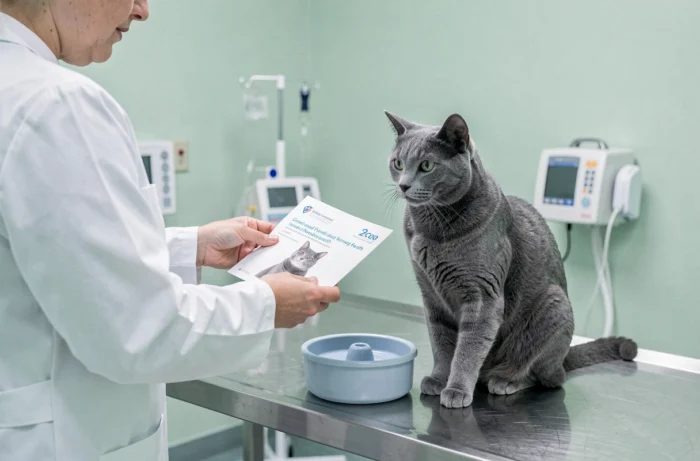
Regular veterinary follow-up (blood tests, creatinine, SDMA) remains the only objective way to measure the real impact of these adjustments on kidney function. The fountain does not replace diagnosis or treatment, but it acts on the parameter that the owner controls best: the amount of water the cat actually accepts to drink.