
Pampers Harmonie and Pampers Premium Protection share the same manufacturer, the same classic diaper shape, and nearly identical sizes. The difference lies in their design: Harmonie emphasizes a composition based on plant-derived materials and certified cotton, while Premium Protection focuses on a reinforced absorption and leak barrier system. Choosing between the two comes down to prioritizing composition or prioritizing raw performance against leaks.
Composition and materials: what distinguishes the contact layer
The contact layer, the fabric layer directly placed on the baby’s skin, is the first technical criterion to examine. Harmonie uses a layer incorporating plant-derived fibers and certified cotton. The range excludes parabens, fragrances, elemental chlorine, and lotions from its composition.
Premium Protection adopts a DermaComfort layer made of polypropylene and polyester fibers. This synthetic layer is designed to quickly wick moisture away to the absorbent core. The brand does not highlight a significant proportion of plant-derived materials for this range.
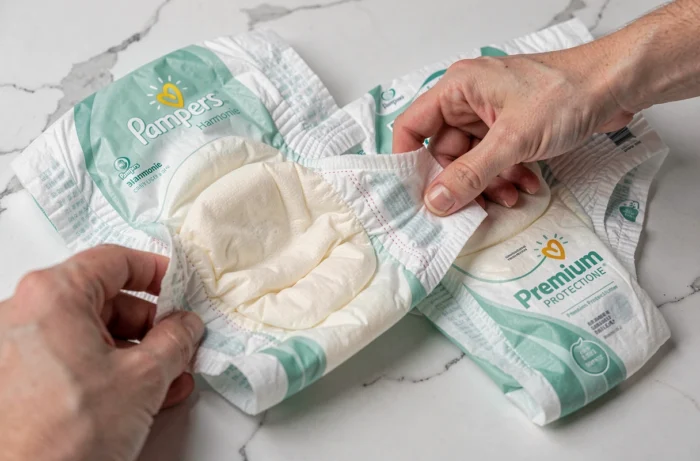
To understand the differences between Pampers Harmonie and Premium Protection diapers in detail, the starting point remains this divergence of materials at the layer level, as it determines both the feel on the skin and the overall philosophy of the product.
In practice, a baby with reactive skin or prone to redness from synthetic materials may tolerate the Harmonie layer better. A baby who produces a lot of urine at night will benefit more from the rapid drainage of the DermaComfort layer.
Absorption and leak barrier: Pampers Premium Protection in detail
Absorption is the main playground of Premium Protection. This range includes a double waterproof leak barrier at the thighs, a system that Pampers does not offer with the same intensity on Harmonie.
The absorbent core of Premium Protection is optimized to capture and retain a high volume of urine, even in prolonged lying positions. The honeycomb structure of the DermaComfort layer contributes to this mechanism: the micro-cells direct the liquid toward the center of the diaper and limit reflux to the surface.
Harmonie absorbs adequately for standard daily use. The difference is mainly evident in extreme situations: long nights, heavy-drinking babies, growth spurts where urine production significantly increases. In these specific cases, Premium Protection reduces the risk of leaks better than Harmonie.
When the leak barrier makes a difference
The double waterproof barrier is not a marketing gimmick. It creates a soft seal along the thighs that prevents lateral overflow, the most common cause of nighttime leaks. If the baby wears the same diaper for more than ten hours at night, this system becomes a tangible advantage.
For daytime use with regular changes every two to three hours, this advantage loses its relevance. The standard absorption of Harmonie is more than sufficient in this scenario.
Labels, eco-design, and composition choices for baby’s skin
Harmonie is the range that Pampers positions as the most eco-designed in its catalog. This translates into several concrete commitments:
- Integration of plant-derived materials in the layer and outer wrap, reducing the share of plastics from fossil resources
- Certified cotton in contact with the skin, a choice that limits exposure to chemical residues from textile processing
- Explicit exclusion of parabens, fragrances, elemental chlorine, and lotions, a longer exclusion list than that of Premium Protection
Harmonie reduces the share of fossil plastics in the contact layer, a point that Premium Protection does not claim. For parents who wish to limit the environmental footprint of disposable diapers, Harmonie represents the most advanced compromise at Pampers.
Premium Protection is not a diaper loaded with controversial substances. It complies with current regulations and undergoes dermatological testing. The difference lies in the degree of transparency regarding materials and the absence of a “natural” positioning.

Available sizes and price per Pampers diaper
Both ranges cover sizes from newborn to large sizes for toddlers. The unit price varies significantly depending on the size and packaging format chosen. Comparing the two ranges solely on the overall package price is misleading: the price per diaper in a given size is the only reliable indicator.
Generally, Harmonie is priced slightly higher than Premium Protection on a unit basis, reflecting the additional cost of plant-derived materials and certified cotton. The gap remains modest on a package, but it accumulates over the thousands of diapers used during the early years.
Criteria for deciding between the two ranges
- Sensitive or reactive skin to synthetics: prefer Harmonie for its layer made of plant fibers and certified cotton
- Long nights or heavy-drinking baby: prefer Premium Protection for its double leak barrier and enhanced absorption
- Environmental concern: Harmonie offers the most eco-designed composition in the Pampers catalog
- Tight long-term budget: Premium Protection may show a slightly lower price per diaper depending on formats
The choice between Pampers Harmonie and Premium Protection depends on the criterion that each parent prioritizes. Skin that does not react to synthetic materials and a baby prone to nighttime leaks lean towards Premium Protection. A desire to reduce exposure to fossil plastics and easily irritated skin lean towards Harmonie.
Both ranges remain classic Pampers diapers, not pull-ups. For a mobile baby starting to stand, Pants versions of both ranges are also available.