A corduroy sofa, a wall painted in a deep burgundy, a coffee table with rounded lines: sometimes three choices are enough to transform a mundane living room into a space with character. Interior decoration does not rely on the accumulation of trendy objects, but on a few well-thought-out decisions that give a clear direction to a room.
Warm minimalism: fewer objects, more materials in your interior
Have you ever noticed that some very minimalist interiors seem cold, almost uninhabitable? Classic minimalism, all in white and straight lines, is gradually giving way to a warmer approach. We talk about warm minimalism: spaces that keep few objects, but where every surface tells a story through its texture.
Specifically, this means replacing a lacquered piece of furniture with a raw wood piece, where the grain remains visible. Or swapping a smooth wall for a slightly irregular lime plaster finish. The principle is simple: material replaces ornamentation.
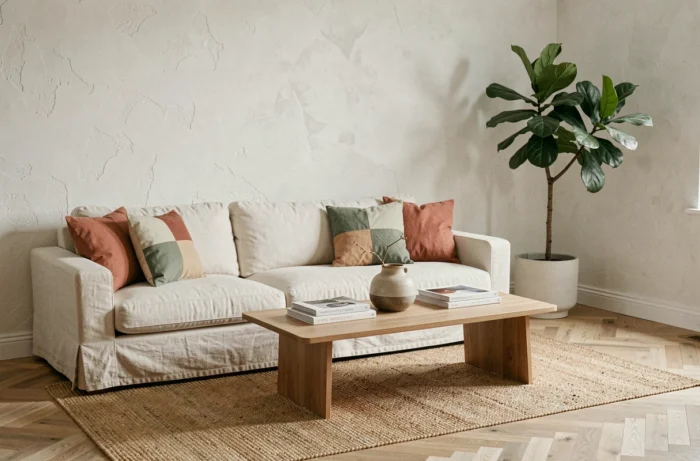
A living room designed in this spirit could combine a crumpled linen sofa, a looped wool rug, and a dark walnut shelf. Patinated, slightly worn finishes are welcome. The furniture pieces and inspirations found on maisonartdeco.fr illustrate this quest for elegance through sobriety and noble materials well.
Dark wood, particularly walnut, is emerging as the flagship material of this trend. It brings depth without weighing down the room, provided it is used in moderation: one large walnut piece per room is sufficient, complemented by light shades on the walls.
Curved shapes and organic furniture: why straight lines are receding
Right angles have long dominated furniture design. This strict geometry is giving way to curved, rounded, and sometimes asymmetrical shapes. The 9th Designer Trends Survey from 1stDibs, published in November 2025, confirms that irregular and organic shapes are emerging as a strong direction for the upcoming seasons.
Why this shift? A rounded piece of furniture alters the flow in a room. A sofa with curved armrests invites a different way of sitting than a rectangular model. An oval dining table allows for an extra guest without anyone getting stuck in a corner.
The idea is not to banish all straight lines. An entirely curved interior can quickly resemble a design showroom. The right approach is to introduce one or two organic pieces into a still structured setting:
- An irregularly shaped mirror placed on a wall of straight bricks creates an immediate contrast.
- A shell-shaped armchair, placed in a simple office corner, becomes the focal point of the room.
- Vases with asymmetrical silhouettes on a straight shelf bring movement without overcrowding the space.
Organic furniture works best when it interacts with its environment, not when it replaces it.
Deep color palette: interior decoration beyond beige
Beige and greige have had their moment of glory. Current palettes are seeking bolder tones without falling into excess. Burgundy, dark sage green, or mocha brown are among the shades that add density to a room.
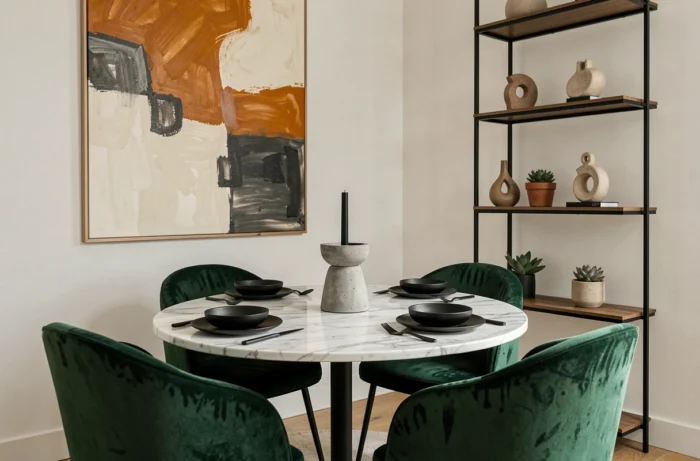
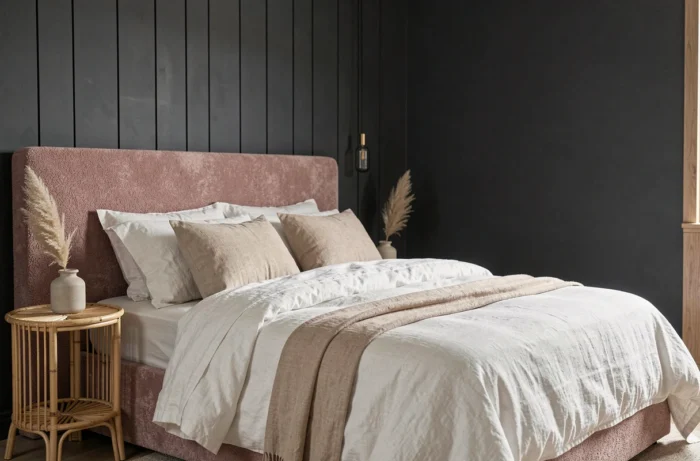
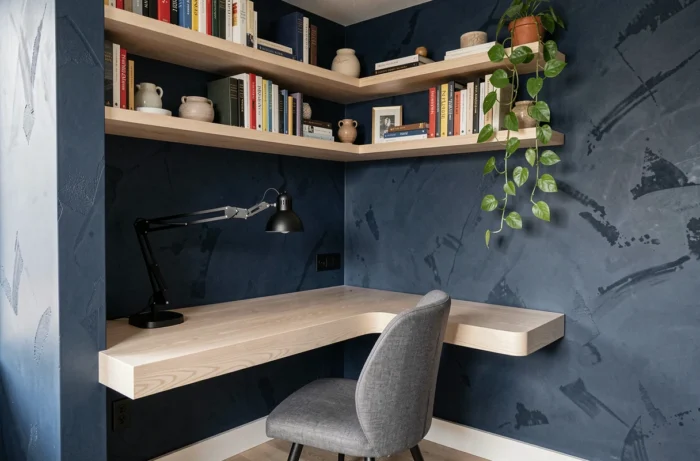
A deep color on a single wall is enough to restructure a space. In a bedroom, a headboard wall painted in burgundy creates a cocooning effect. In a living room, a dark green wall behind a bookshelf visually anchors the gaze.
The common mistake is to want to multiply strong colors. Two deep shades in the same room compete for attention and tire the eye. The principle that works: one dominant color (light walls), one accent color (a wall or a large piece of furniture), and neutral textures to let the whole breathe.
Color and natural material combinations
A burgundy wall paired with light wood looks sophisticated. The same burgundy with chrome metal produces a completely different effect, more contemporary, almost Art Deco. The choice of adjacent material matters as much as the color itself.
Elements made of natural stone, terracotta, or rattan temper saturated shades and bring softness. It is this combination of color and raw material that gives current interiors their trendy yet livable character.
Biophilic design: integrating nature beyond green plants
Placing a ficus in a corner of the living room is a start. Biophilic design goes much further. In 2026, this approach evolves towards multisensory spaces, where nature intervenes through sound, touch, and light, not just visually.
Some concrete applications:
- Favor flooring made of raw materials (stone, solid wood) that convey coolness or warmth to the feet.
- Increase natural light entry by clearing windows, even if it means replacing opaque curtains with light sheers.
- Introduce water in the form of a small indoor fountain, whose continuous sound masks urban noises.
- Choose finishes that visibly age (tanned leather, patina brass) rather than immutable surfaces.
Biophilic design adapted to the location works better than a one-size-fits-all recipe. A north-facing Parisian apartment will not call for the same choices as a sun-drenched Provençal house. Designers are now adjusting the palette, materials, and light management to local climatic and cultural constraints, rather than imposing a single model.
Interior decoration gains coherence when it starts from the room as it exists (its light, its volumes, its daily use) rather than from an image spotted on social media. A walnut wall, a curved armchair, or a well-placed deep shade can transform a space without distorting it. Three right decisions are worth more than twenty impulsive purchases.